Module 13 – Roots & Reckoning: History, Ethics, & Decolonization of Yoga
December 11 – 19, 2027 & January 15 – 23, 2028
Sa. 11:00 – 18:00 & Su. 9:00 – 15:00
Where Yoga Comes From, and What We Owe It
This 50-hour module traces yoga’s lineage from the Vedic seers to the global studio floor, and asks teachers to sit honestly with what that lineage carries — its philosophy, its ethics, its ruptures, and its ongoing politics. Students will move chronologically through Vedic, classical, medieval/tantric, colonial, and modern periods, then turn to the present: what does it mean to teach yoga today with integrity, in a Western studio, in a body and culture not indigenous to the tradition?
The module deliberately resists two common failure modes in YTT history teaching: (1) a flattened “ancient wisdom” narrative that erases rupture, colonial trauma, and reinvention; and (2) a purely academic history that never lands in the teacher’s actual practice, pricing, marketing, or classroom conduct. Every historical unit closes with a “So what do I do with this on Monday morning” reflection.
This module is taught in cohort discussion format, after a short lecture on each topic. Expect real conversation, disagreement, and shared reflection — this is history and ethics worked through together, not delivered from the front of the room. This is designed as a standalone module within the 200-hour YTT program.
Schedule:
Contact Hours: December 11-19, 2027 & January 22-23, 2028
Non-Contact Hours: January 15-16, 2028
Language of Instruction:
This module is taught by Erika, a native English speaker with C1-level German proficiency. Sessions will be conducted in both English with German translation available upon request. The accompanying manual will be in English. There are 14 non-contract hours in this module.

Roots & Reckoning: History, Ethics & Decolonization of Yoga
This module traces yoga’s journey from the Vedic seers to the modern studio floor — and asks the questions many trainings skip.
Across 50 hours, you’ll explore:
The Vedas & the Rishis — where “yoga” begins, long before it meant anything like a class
The Upanishads — the shift from ritual to inner inquiry, and the roots of Advaita philosophy
Patanjali’s Yoga Sutras — the eight limbs, and a real, unhurried look at the yamas and niyamas as living ethics
The Bhagavad Gita — karma yoga, dharma, and ethics in action rather than withdrawal
Tantra & Hatha Yoga — the medieval body-based practices that most modern yoga actually descends from
Colonialism & Revival — how yoga was suppressed, then re-presented, under colonial rule
Krishnamacharya & Modern Postural Yoga — the Mysore synthesis behind almost every class taught today, and the divergent lineages of his students
Globalization & Commodification — how yoga became a global industry, and what that costs
Contemporary Teaching Ethics — consent, touch, power, access, and teacher responsibility
Decolonizing Yoga — appropriation vs. appreciation vs. decolonization, and what honest, accountable teaching looks like in practice
Integration — bringing it all together into your own teaching philosophy
By the end, you’ll be able to teach with a real understanding of where this practice comes from — its wisdom and its ruptures — and with a concrete, personal ethics grounded in that history.
Sample Schedule
(May be adapted according to group needs)
Saturday
Session •11:00-12:30
Break •12:30-13:30
Lecture •13:30-16:30
Break •16:30-17:00
Group- | Partner Work | Self Study •17:00-18:00
Sunday
Lecture •9:00-12:30
Snack •12:30-13:00
Group- | Partner Work | Self Study •13:00-15:00
- You’ll leave with a real historical grounding — not a mythologized “5,000 years of ancient wisdom” story, but an honest account of yoga’s ruptures, revivals, and reinventions, including your own place in that lineage.
- You’ll be asked to sit with discomfort, not just information — decolonization and appropriation are contested topics even within yoga communities, and this module makes space for genuine disagreement rather than a tidy consensus.
- You’ll walk away with something usable — a personal teaching philosophy and concrete changes to your own language, cueing, and studio practice, not just theory left on the page.
This 50-hour Course (36 contact and 14 no-contact hours) here at Manas Yoga Studio is a registered Yoga Alliance Continuing Education and can be added to your continuing education hours.



Investment
______________________
Early Bird: € 950 (until October 1, 2027)
Regular Price: € 1,050
_______________________
Core & Suggested Reading
Core (assign in full or substantial excerpt):
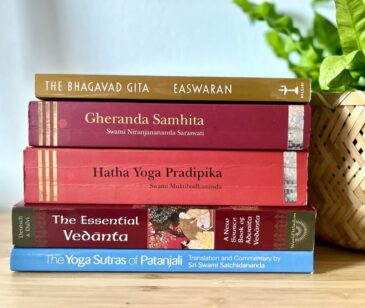
Patanjali, Yoga Sutras (any annotated translation, e.g. Edwin Bryant)
Bhagavad Gita, chapters 2–3 (karma yoga)
Selections from the Hatha Yoga Pradipika
Mark Singleton, Yoga Body: The Origins of Modern Posture Practice
Andrea Jain, Selling Yoga: From Counterculture to Pop Culture
The Trauma of Caste: A Dalit Feminist Meditation on Survivorship, Healing, and Abolition, Thenmozhi Soundararajan
Decolonizing Yoga: From Critical to Cosmic Consciousness — Punam Mehta, Ph.D.
Recommended further reading:
Shreena Gandhi & Lillie Wolff, “Yoga and the Roots of Cultural Appropriation” (essay)
David Gordon White, The Yoga Sutra of Patanjali: A Biography
Elizabeth De Michelis, A History of Modern Yoga
Christopher Key Chapple, writings on yoga ethics and ecology
Five-book core recommended list (history, decolonization, caste trauma, Vedas & Yoga Sutra):
The Rig Veda: An Anthology, trans. Wendy Doniger — (Vedas) the earliest textual layer this module opens with
The Yoga Sutras of Patanjali: A New Edition, Translation, and Commentary, Edwin Bryant — (Yoga Sutra) includes classical commentaries, key for the deep yamas/niyamas study in Unit 3
Yoga Body: The Origins of Modern Posture Practice, Mark Singleton — (History) the scholarly account of Krishnamacharya-era synthesis
Embrace Yoga’s Roots: Restoring the Practice to Its Origins, Susanna Barkataki — (Decolonization) practice-oriented, concrete steps for decolonizing one’s own teaching
Edward Said, Orientalism (excerpts, for the colonial unit)
Rina Alluri’s work on decolonized/embodied peace and yoga pedagogy
Meet your Instructor
Erika Smith Iluszko Studio Owner | Meridian Yoga Practitioner
My love for movement and spirituality was evident from an early age. Trained in dance, Kung Fu, and multiple yoga traditions, I sees movement as a universal language that connects body, mind, and spirit. After devoting and following the eight limbs of yoga for about two decades, I decided to do the 200-hour Yoga Teacher Training in Madras, India. Since then, I have attended numerous trainings and workshops which had a huge impact on the way I teach.
My unique approach weaves together classical yoga philosophy with Traditional Chinese Medicine, modern fascia research, and integrative healing arts. My teaching transcends conventional instruction, creating spaces where students discover their innate wisdom through embodied exploration.
I see nothing external to my yoga practice as I find everything in life is deeply connected and that ultimately no teacher is greater than the one within.